

Discover the blueprint of a winning commercial real estate offering memorandum. Learn the essential sections investors expect and how to automate your documentation process.
Commercial Real Estate Offering Memorandum: The Ultimate Broker Guide
High-stakes commercial property deals require clear facts and polished visual presentations. Brokers use specialized documents to showcase potential returns and property conditions to serious buyers. A commercial real estate offering memorandum serves as the primary tool to pitch multi-million dollar assets.
Investors rarely make moves without complete data. Therefore, your pitch materials must deliver clear numbers, market trends, and asset details right away. Winning deals requires speed, clarity, and total accuracy from the start.
What is an Offering Memorandum (OM)?
Commercial real estate professionals rely on detailed pitch books to present opportunities. This asset document acts as a complete guide for potential buyers.
What is an offering memorandum in commercial real estate?
An offering memorandum is a formal document that details a commercial property investment for prospective buyers. It provides financial projections, location analysis, and building specs so investors can make informed decisions quickly.
Brokers usually share this document after buyers sign a non-disclosure agreement. It protects sensitive financial data while giving serious investors everything they need. The document combines marketing content with deep financial reporting.
Key Takeaway: Think of the document as both a sales pitch and a legal disclosure. It helps buyers evaluate potential risk and return.
Why the OM is Your Most Important Sales Asset
Your pitch presentation creates the first real impression of an asset. A clean, accurate document builds immediate trust with institutional investors and private buyers alike.
Data transparency removes guesswork for underwriting teams. When you share organized financial tables, buyers analyze the deal much faster. Industry surveys show that well-structured deals secure buyers up to 30 percent faster than poorly documented listings.
Speed to market also depends on presentation quality. Clear layouts prevent endless follow-up emails regarding missing documents. Consequently, brokers close deals sooner and protect their commission pipeline.
Essential Components of a CRE Offering Memorandum
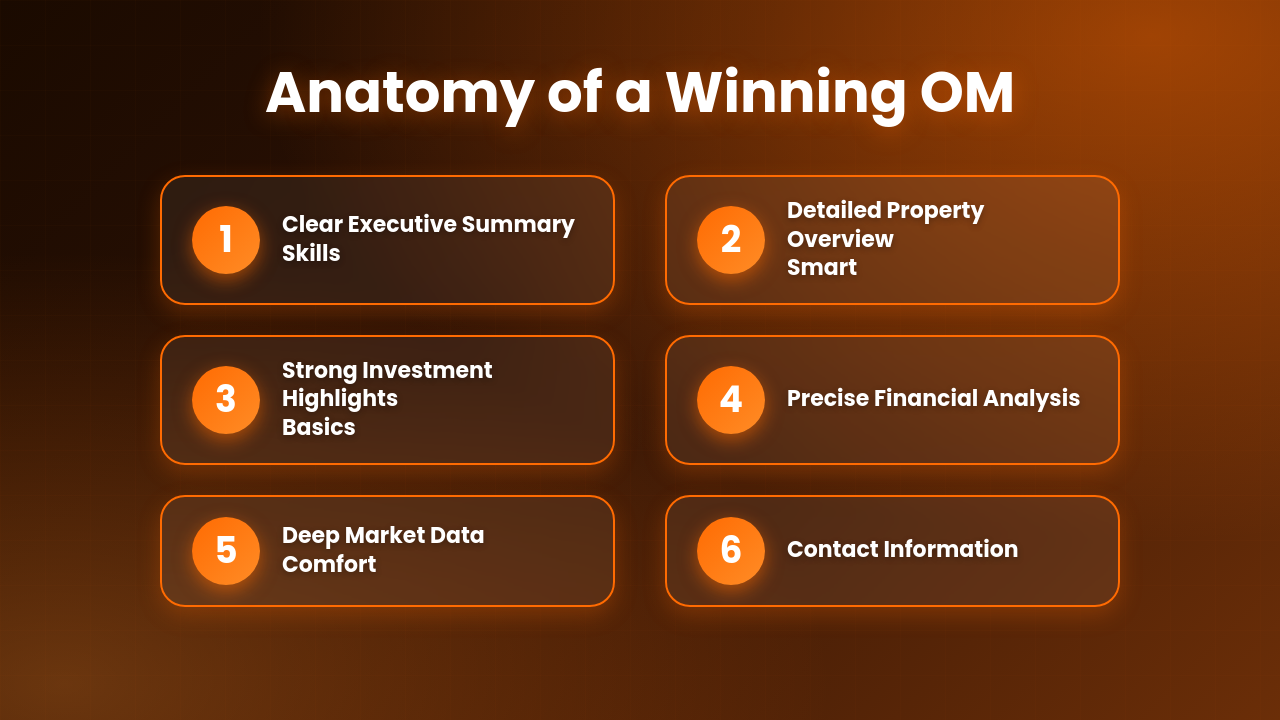
Every strong pitch deck follows a logical structure. Investors expect specific sections when they review commercial assets.
- Executive Summary: Highlights the core deal structure, asking price, cap rate, and location highlights.
- Property Overview: Covers physical traits like square footage, zoning, construction year, and parcel maps.
- Investment Highlights: Outlines competitive advantages, tenant quality, and value-add opportunities.
- Financial Analysis: Displays rent rolls, historical income statements, operating expenses, and cash flow projections.
- Market Data: Provides neighborhood demographics, traffic counts, local employment statistics, and submarket vacancy trends.
- Broker Contact Information: Directs interested parties to the listing agents and transaction team.
Omitting any of these key sections causes delays during due diligence. Modern buyers want complete packages before they commit capital.
Best Practices for Professional Design
Design choices directly impact how investors perceive property value. Messy layouts and tiny fonts hurt credibility instantly.
High-resolution photography catches attention first. Clear aerial photography shows traffic routes, neighboring anchors, and property boundaries. Charts and infographics help buyers understand complex financial trends faster than raw numbers alone.
Data accuracy matters just as much as visual style. One wrong metric in a rent roll can ruin investor trust. Always double-check every figure across all pages.
The Challenge: Manual Data Entry vs. Competitive Speed
Building professional decks manually eats up valuable time. Brokers often waste hours copy-pasting numbers from listing sites like LoopNet into static design templates.
Manual formatting creates huge bottlenecks for growing brokerages. Typing figures by hand also invites simple typos that ruin financial reports. The table below compares manual design methods against modern automated workflows.
| Feature | Manual OM Creation | Automated Workflow |
|---|---|---|
| Time Spent Per Pitch | 6 to 10 Hours | Under 15 Minutes |
| Risk of Typos | High | Zero Manual Errors |
| Design Consistency | Varies by Staff | 100% Brand Aligned |
| Data Extraction | Manual Copy-Paste | One-Click Pull |
How to Streamline Your Workflow with PropQwik
Commercial brokers must move quickly to secure listings and close buyers. Software automation solves the manual design headache easily.
How can brokers create an offering memorandum faster?
Brokers create an offering memorandum faster by using automated platforms that convert listing data directly into pitch decks. Specialized tools extract property metrics in one click and build branded presentation slides automatically.
PropQwik streamlines this exact process for busy commercial real estate teams. The platform pulls property details directly into customizable PowerPoint decks. You retain full control over formatting while eliminating tedious manual typing.
Automated software saves hours on every listing. Consequently, brokerages spend more time pitching clients and closing deals instead of fixing slide margins.


Choosing the Right OM Real Estate Template
Brokers often ask whether simple static templates are enough for high-value properties. Selecting the right format shapes your team efficiency.
Are free commercial real estate OM templates worth using?
Free commercial real estate OM templates work for small deals, but they slow down growing brokerages. Static files demand manual updates, which increases design costs and creates layout errors across long presentations.
- Static PDF Templates: Low upfront cost, but slow to update manually.
- InDesign Layouts: Highly custom designs, but require expensive graphic designers.
- PowerPoint Slides: Easy to edit, but manual formatting eats up valuable hours.
- Automated Document Software: Combines professional presentation speed with automated data pulling.
Pick a solution that scales with your deal volume. Fast-moving teams benefit most from automated template engines.
Pro-Tips: Using a CRE Offering Memorandum Example
Study successful deal books from top commercial brokerages before building your own package. A great CRE offering memorandum example shows how top teams balance visual appeal with analytical depth.
Review competitor decks to see how they present rent rolls and submarket growth rates. Benchmark your layout against institutional standards to ensure your deal looks top-tier.
Keep your layout simple, consistent, and easy to skim. Highlight key returns early so investors grasp the core investment thesis within thirty seconds.
Conclusion
Speed and accuracy drive success in modern commercial real estate brokerage. A high-quality commercial real estate offering memorandum communicates value, builds buyer trust, and shortens sales cycles significantly. Automating your presentation workflow eliminates painful manual data entry while maintaining total visual quality.
Ready to build professional property decks in seconds? Start your PropQwik 7-day free trial today and upgrade your CRE deal workflow.
Frequently Asked Questions
Q1. What is the difference between an offering memorandum and a flyer?
A: A real estate flyer provides a quick one-page overview of basic property features. An offering memorandum contains full financial statements, tenant details, and market demographics for serious investor analysis.
Q2. Who prepares the commercial real e state offering memorandum?
A: Commercial real estate brokers or specialized marketing team members prepare the document on behalf of property owners. They pull data from property managers, appraisers, and public records.
Q3. Is an offering memorandum legally binding?
A: No, an offering memorandum serves as an informational sales asset rather than a legally binding contract. However, brokers must provide accurate data to avoid potential misrepresentation claims during due diligence.
Q4. What software do brokers use to create property presentations?
A: Brokers traditionally use Adobe InDesign or Microsoft PowerPoint to design property decks. Modern teams now use specialized CRE automation platforms like PropQwik to build PowerPoint presentations automatically from property links.
Q5. Why do sellers require an NDA before sending full package materials?
A: Sellers protect sensitive property data, like lease rates and individual tenant details, by requiring a signed non-disclosure agreement. This keeps private financial records out of general public view.
Q6. How long should a standard property pitch deck be?
A: Most commercial property deal packages run between 15 and 40 pages. Simple single-tenant deals require shorter presentations, while multi-tenant retail centers or office parks need more detailed financial reporting.
Q7. How often should financial figures be updated in an OM?
A: Brokers must update financial figures whenever new trailing twelve-month statements or updated rent rolls become available. Outdated financial figures delay underwriting and harm listing credibility.